
Whiteboards Buying Guide
Whiteboards are super useful tools for the workplace, from meeting rooms, classrooms and training areas to the wall above a home office desk. This guide walks you through material and finish, how the board is mounted, and the care that keeps it looking good for years.

In a hurry?
Our quick picks
Three common situations and the board we'd choose for each. The rest of the guide explains why.
Busy classroom or training room
Magnetic enamel, wall-mounted
Used all day, every day. Enamel shrugs off scratches and ghosting and lasts for decades.
Shop enamel whiteboardsMeeting room with big windows
Low-glare magnetic board
A matte finish scatters light from windows and projectors, so everyone can read it.
Shop magnetic whiteboardsFlexible or shared space
Mobile, double-sided
Wheel it between rooms and flip it over for twice the writing space.
Shop mobile whiteboardsMaterial
Magnetic vs non-magnetic whiteboards
Magnetic boards have a steel surface, so you can use magnets to temporarily fix notices, plans and other information alongside the notes you're writing. That's why they're so popular in meeting rooms, offices and classrooms, where the board doubles as a temporary display.
Magnetic
- Pin printouts, plans and notices with magnets
- Doubles as a display board
- Ideal for meeting rooms and classrooms
- Heavier, because of the steel surface
- Costs more
Non-magnetic
- Lighter, so it fixes to almost any wall
- Lower price
- Perfect if you only ever write on it
- Can't hold magnets
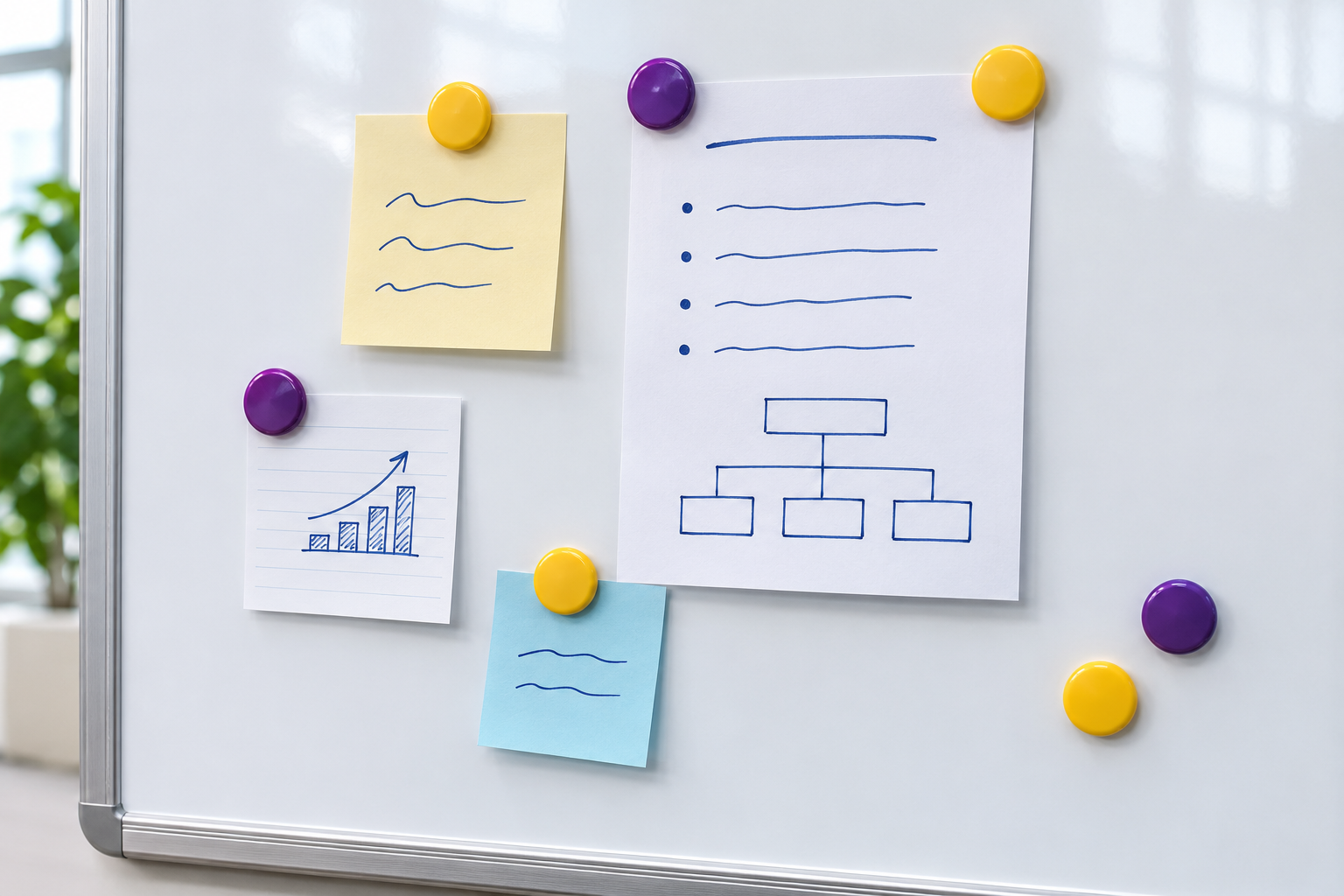
If you regularly use printed information alongside your notes, it's definitely worth spending a little more on a magnetic whiteboard. If not, a piece of Blu Tack works just as well for the odd note here or there!
Finish
Enamel vs lacquered surfaces
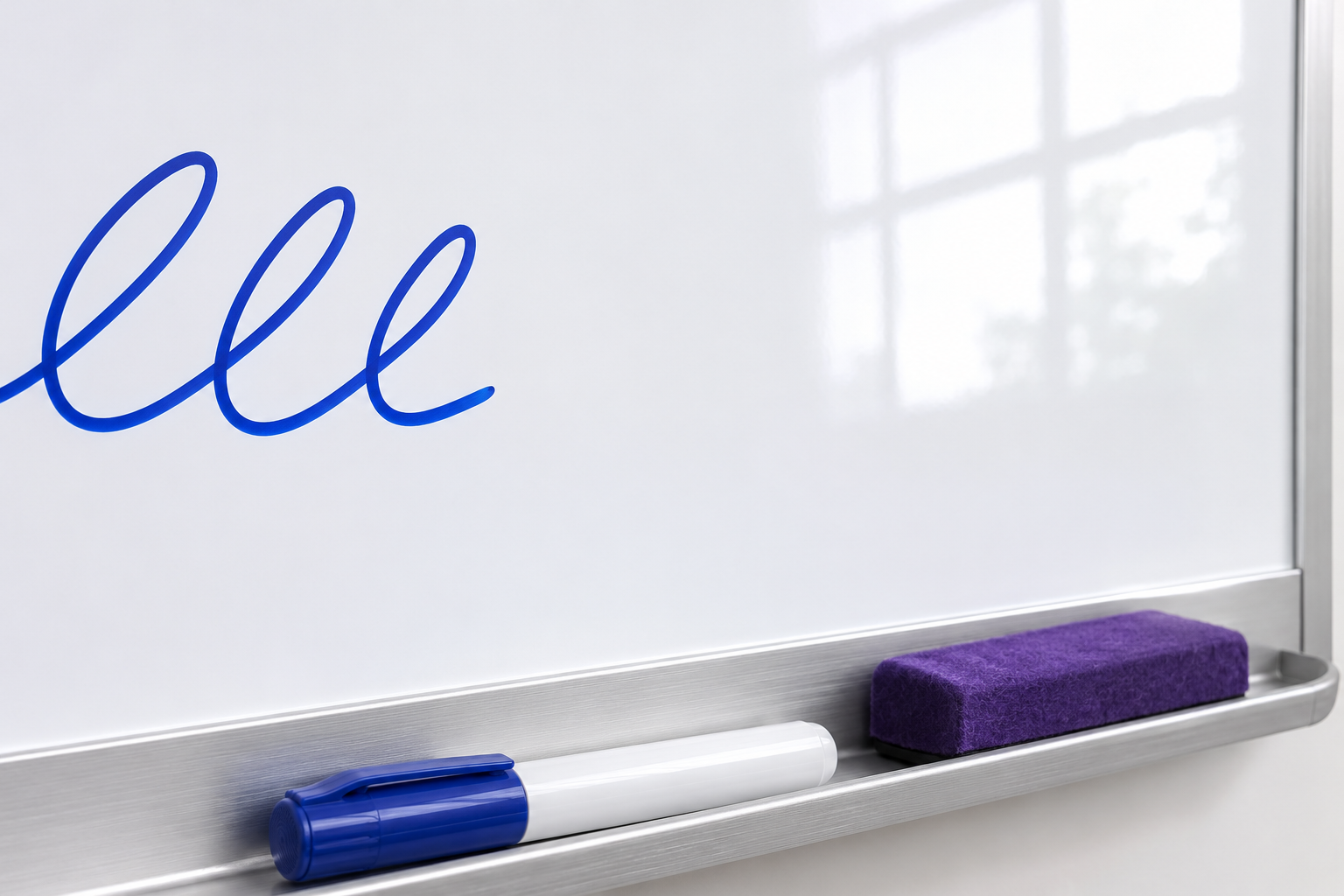
The surface of an enamel whiteboard is made by fusing glass onto steel at extremely high temperatures. This creates a super-smooth, non-porous, commercial-grade shield that's perfect for heavy, frequent use. It resists accidental scratching from erasers, staining from unsuitable pens and ghosting from previous notes, so it's a fantastic choice for busy offices, classrooms and training rooms.
A lacquered finish also gives a smooth writing surface, but costs less. A layer of resin or lacquer is painted onto a metal backing and baked on. The result is a softer surface that's more prone to scratches and ghosting, and to losing its protective topcoat if harsh cleaners are used.
| Enamel | Lacquered | |
|---|---|---|
| How it's made | Glass fused onto steel at very high temperatures | Resin or lacquer painted onto metal and baked |
| Durability | Commercial grade. Resists scratches, stains and ghosting | Softer. More prone to scratches and ghosting |
| Typical lifespan | 10–25 years with heavy use | 1–5 years with moderate use |
| Best for | Busy offices, classrooms, training rooms | General offices and meeting rooms with moderate use |
| Price | Higher upfront | Lower upfront |
One enamel board or four lacquered ones?
The difference in finish means there can be quite a gap in price. But add up how many lacquered boards you might buy over the years, compared with one enamel board that could last up to four times as long, and the enamel often works out better value.
Finish
Low-glare surfaces
If your whiteboard will mostly be used in a meeting room or classroom where lighting causes reflections, whether from overhead lights, a projector or a nearby window, consider a low-glare surface. This is a matte or very low-gloss finish designed to scatter ambient light rather than reflect it like a mirror.
Stand where your audience sits
Look at the wall where the board will hang. If you can see the windows or lights reflected in a glossy surface there, go low glare.
Mounting
Wall-mounted vs mobile whiteboards
Do you want a fixed focal point for one room, or a board that travels to wherever the meeting is?
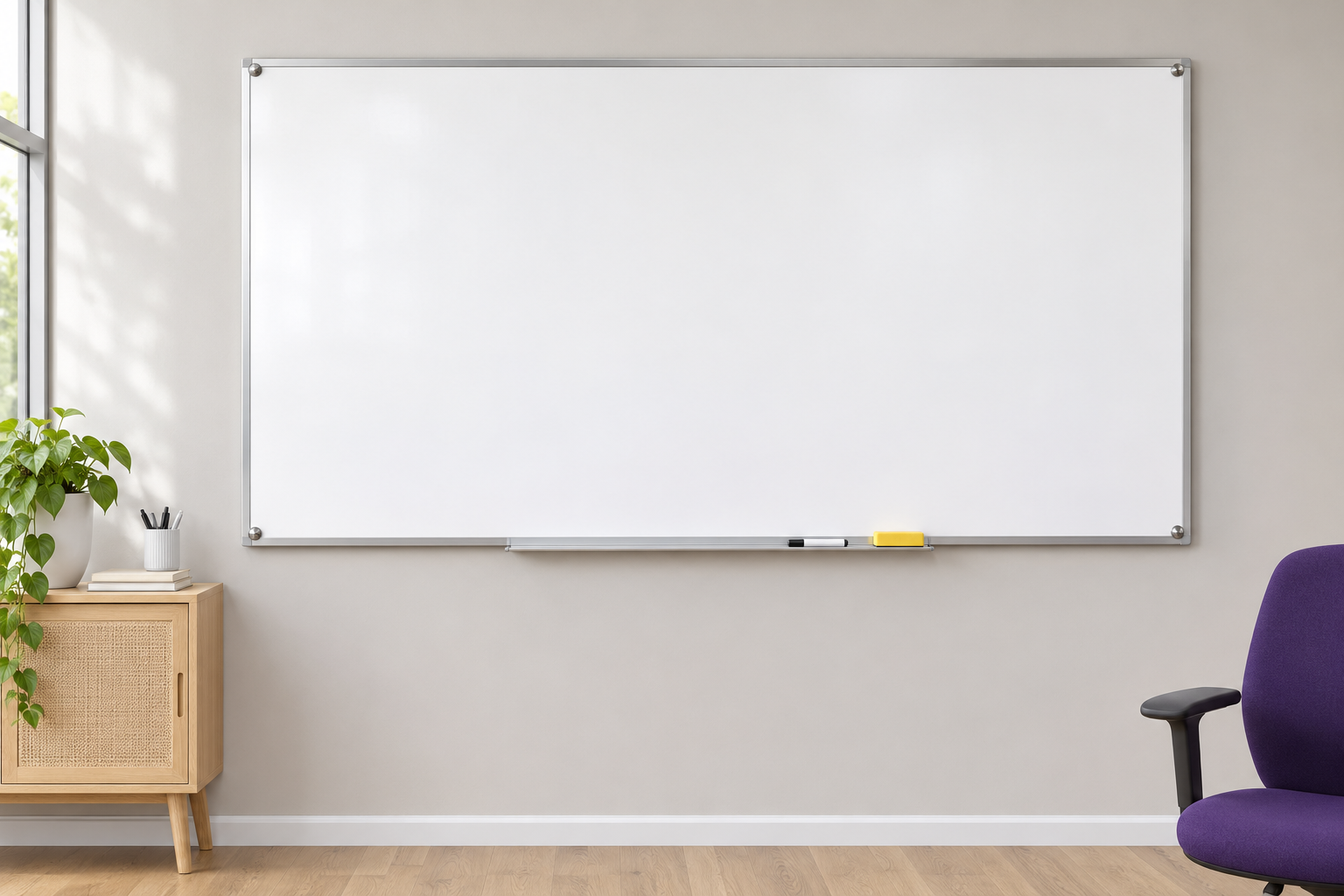
Wall-mounted
- A fixed focal point for the room
- Great for dedicated meeting rooms, classrooms and breakout areas
- Takes up no floor space
- Check your wall can take the weight first
Great when you have a dedicated space for meetings and the board will always be needed. Before you buy, check the mounting requirements and the wall you plan to fix to. Light boards, such as non-magnetic models, can go on almost any wall, but a magnetic enamel board can be heavy, so make sure the wall can comfortably take the load.
Shop wall-mounted boards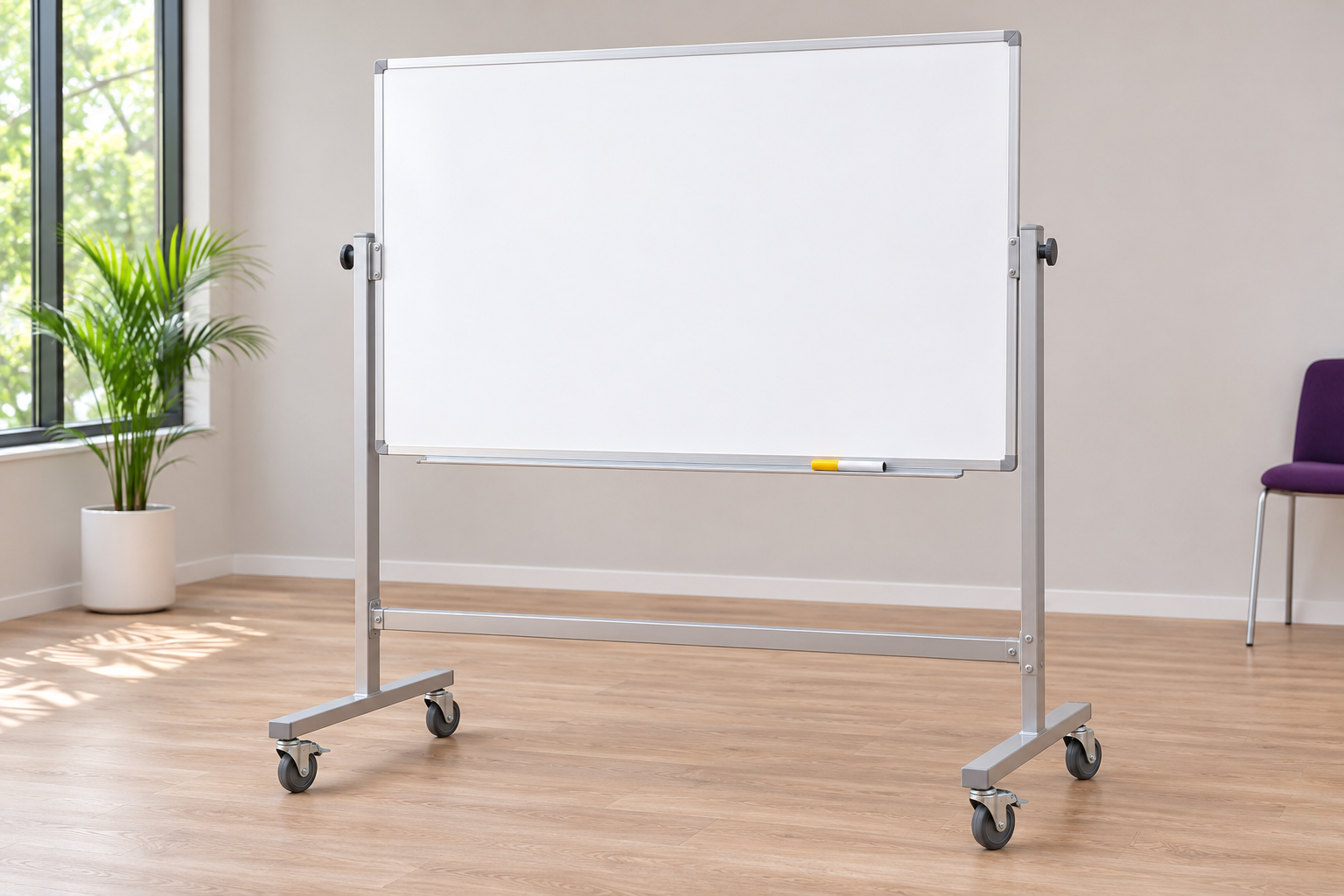
Mobile
- Wheels from room to room, or between sites
- Ideal for flexible workspaces and training rooms
- Many models are double-sided for twice the space
- Needs room to turn or flip
Mobile boards sit on a wheeled frame, so they're easy to move between rooms. Because they're so easy to turn around, many come with a double-sided writing surface. That doubles your writing area, but remember to allow space to turn the board or flip the screen.
Shop mobile boardsFit
Choosing the right size
Whiteboards can be bulky, particularly mobile models, so measure the space where the board will most often be used. Before you decide, check that there's room for:
- The board itself, including any frame or pen tray.
- A presenter to stand comfortably and write.
- Manoeuvring a mobile board into position, or flipping it over.
- Your audience to read it. In a large room, a small board only works for those sitting close by. Go bigger, or use more than one board (and presenter) for a big group.

Care
Cleaning and maintenance
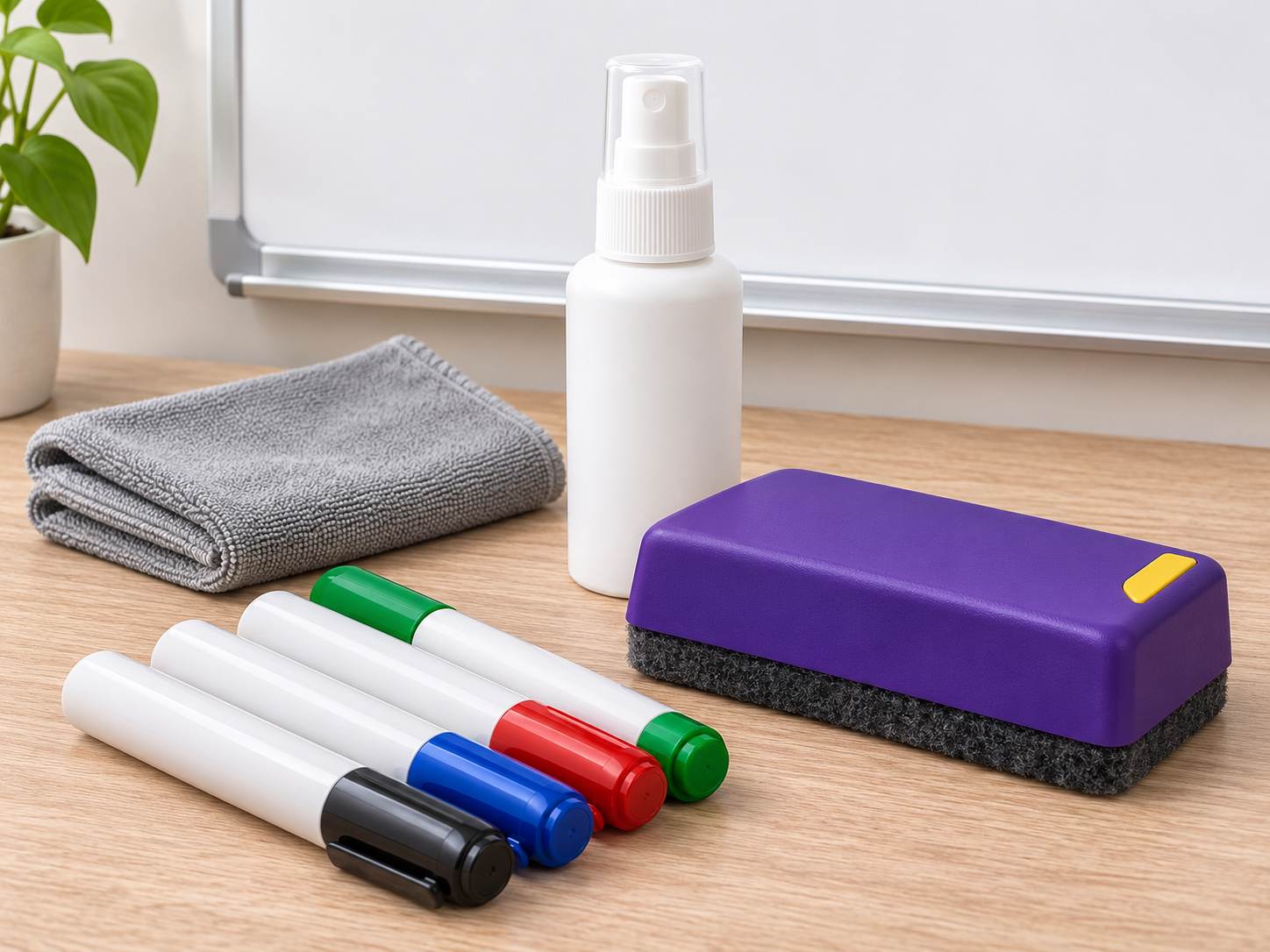
It's really important to use marker pens designed specifically for whiteboards. Whiteboard markers contain a special oily ingredient that stops the ink from bonding to smooth surfaces, so it lifts away easily with a whiteboard eraser without staining the board.
If you use a spray to clear down a busy board, choose one made specifically for whiteboards. Its gentler formula won't damage the surface, which matters most on lacquered finishes.
Do
- Use whiteboard markers only
- Wipe with a proper whiteboard eraser
- Use a cleaning spray made for whiteboards
- Clean regularly to avoid ghosting
Don't
- Use permanent markers or unsuitable pens
- Use harsh household chemical cleaners
- Scrub with abrasive cloths or sponges
- Leave notes on a lacquered board for weeks
Ready to choose your whiteboard?
We hope this guide has given you a clearer idea of what to look for. If you need more information, get in touch. Our team are always happy to help!
