
Rubber Band Size Chart + Buying Guide
Not sure which rubber band size you need? This guide explains rubber band numbers, how bands are measured, how to choose the right size for your bundle and which band width is best for everyday office, packing and heavier-duty use.
What do rubber band numbers mean?
Rubber bands, sometimes called elastic bands, are commonly sold using size numbers such as No.10, No.14, No.32 and No.64. The number acts as a quick reference to a particular combination of flat length and band width.
Instead of trying to remember individual measurements, the numbered sizing system makes it much easier to identify and reorder the band you use regularly.
A larger number does not always simply mean a longer band. Different number ranges can also indicate a different band width, so it is worth checking both measurements in the chart below.
Don't choose on number alone
Check both the flat length and band width. Two bands can have a similar length but a very different width and therefore a different feel and holding strength.
How do I measure a rubber band?
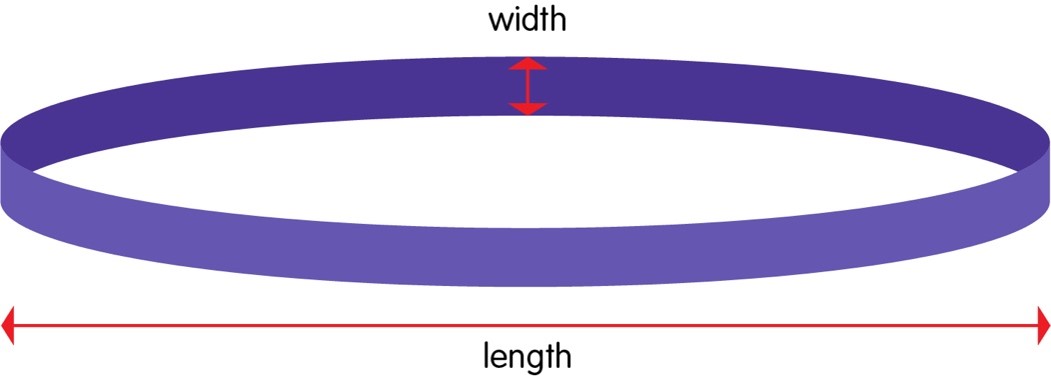
Rubber bands are normally identified using their flat length and cut width. Wall thickness is a separate measurement and can vary depending on the band.
Place the rubber band on a flat surface without stretching it.
Measure from one end of the flattened band to the other.
Measure across the actual strip of rubber. This is the 1.6mm, 3.2mm, 6.3mm etc. measurement shown in our chart.
Rubber Band Size Chart
Use the table below to compare the most common rubber band sizes by flat length and band width.
| Rubber Band Size | Flat Length | Band Width | Typical Use |
|---|---|---|---|
| No.10 | 31.75mm | 1.6mm | Light office use |
| No.12 | 38.1mm | 1.6mm | Light office use |
| No.14 | 50.8mm | 1.6mm | Papers & small bundles |
| No.16 | 63.5mm | 1.6mm | General office use |
| No.18 | 76.2mm | 1.6mm | Documents & light bundles |
| No.19 | 88.9mm | 1.6mm | Documents & light bundles |
| No.24 | 152.4mm | 1.6mm | Larger lightweight bundles |
| No.30 | 50.8mm | 3.2mm | Stronger everyday hold |
| No.32 | 76.2mm | 3.2mm | Office & packing |
| No.33 | 88.9mm | 3.2mm | Office & packing |
| No.34 | 101.6mm | 3.2mm | Larger bundles |
| No.36 | 127mm | 3.2mm | Larger bundles |
| No.38 | 152.4mm | 3.2mm | Packing & storage |
| No.63 | 76.2mm | 6.3mm | Firm, secure hold |
| No.64 | 88.9mm | 6.3mm | Packing & heavier bundles |
| No.65 | 101.6mm | 6.3mm | Packing & heavier bundles |
| No.69 | 152.4mm | 6.3mm | Large bundles |
| No.75 | 101.6mm | 9.5mm | Heavy-duty use |
| No.89 | 152.4mm | 12.7mm | Heavy-duty & industrial use |
How do I choose the right size?
Start with the size of the actual bundle you need to secure, then use the flat length of the rubber band as your guide.
Measure around your bundle
Use a flexible tape or piece of string to measure the circumference at the exact point where the rubber band will sit.
Divide the measurement by roughly two
This gives you a useful starting point for the band's flat length. A slightly shorter band can be chosen where more tension is required.
Choose the width for the job
Narrow bands suit lighter everyday tasks, while wider bands generally provide a firmer hold for larger or heavier bundles.
Avoid overstretching. If a band has to be stretched excessively to fit, move up to a longer size. This can help reduce snapping and premature wear.
What band width do I need?
As well as length, consider how wide the rubber band is. Wider bands spread the load over a larger area and generally give a firmer hold.
Narrow Bands
Approx. 1.6mmFlexible and easy to apply. A good choice for paperwork, envelopes, stationery and lightweight everyday bundles.
Medium Bands
Approx. 3.2mmA stronger everyday option for bigger bundles, packaging tasks and general workplace use where a firmer hold is useful.
Wide Bands
Approx. 6.3–12.7mmBetter suited to heavier bundles, shipping, warehousing and jobs that require a wider contact area and more secure grip.
Other types of rubber band
Standard natural rubber bands will cover most everyday requirements, but specialist materials can be a better choice for particular environments.
Natural Rubber
Highly elastic, economical and ideal for most everyday office, organisation and general-purpose bundling jobs. Like most natural rubber products, elasticity can reduce over time.
Silicone Bands
Often selected where heat resistance, washability or repeated reuse is important. Suitable silicone products are also available for specialist food and medical applications.
Synthetic / EPDM Bands
Specialist synthetic materials can offer improved resistance to weather, UV, heat and certain chemicals, making them useful for storage, outdoor and industrial environments.
Ready to find the right rubber bands?
Browse our full range of rubber bands online, or get in touch with the Purple Panda team if you're unsure which size is best for your application.
