
Eco-Friendly Workplace Supplies Buying Guide
Choosing greener workplace products does not need to be complicated. This guide explains what to look for, which labels matter and how to reduce waste across stationery, workwear, furniture, cleaning and catering.
A greener purchase is not simply the product with the greenest packaging. Consider materials, durability, everyday use and what happens at the end of its life.
Better materials. Less waste. Longer life.
Focus on the features that make a practical difference in your workplace.
What Makes an Office Supply Eco-Friendly?
Sustainable office supplies are designed to reduce environmental impact across their lifecycle. Rather than relying on one green claim, look at the materials, how the product is made and used, how long it lasts and how it can be dealt with when it is no longer needed.
Materials and sourcing
Look for recycled or post-consumer content, renewable materials and responsibly sourced paper or wood. For paper-based products, a recognised forestry certification can help verify the sourcing claim.
Production and everyday use
Consider products made through lower-impact processes and options that use less energy, water or packaging. Concentrated cleaning products, refill systems and water-based or lower-emission formulations can all be useful choices where appropriate.
Lifespan and end of life
Durable, refillable, reusable and repairable products can reduce repeat purchasing. When replacement is unavoidable, check whether the item and its packaging can be recycled or composted through facilities you can actually access.
Eco-Friendly Supplies for Every Part of the Workplace
There are more sustainable options across most workplace categories. Use these quick prompts to compare products without getting lost in vague environmental claims.
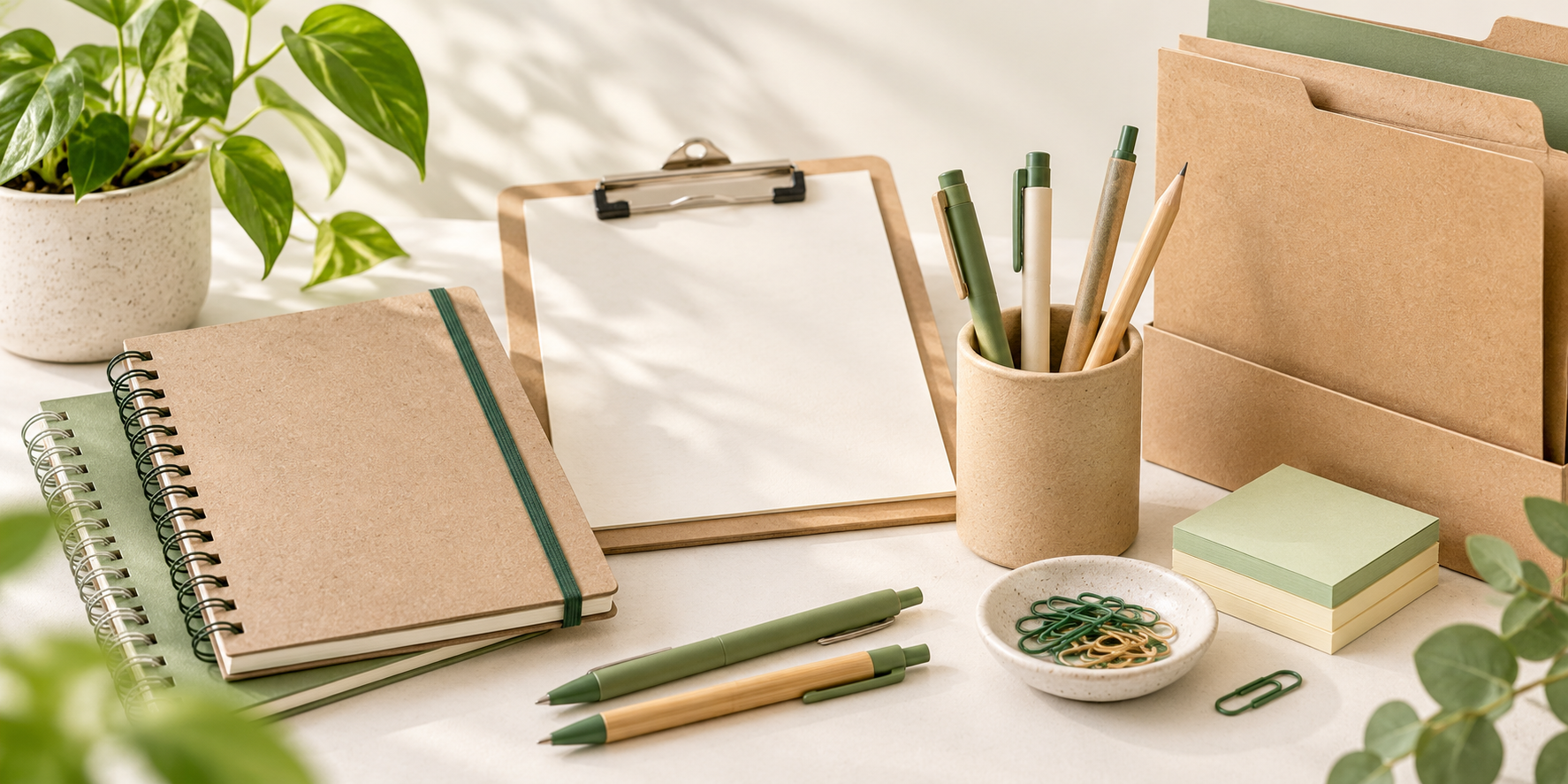
Stationery
For notebooks, copier paper and filing products, compare recycled content and responsible sourcing. Choose refillable pens and markers where possible, and reduce single-use plastic in folders and desk accessories.
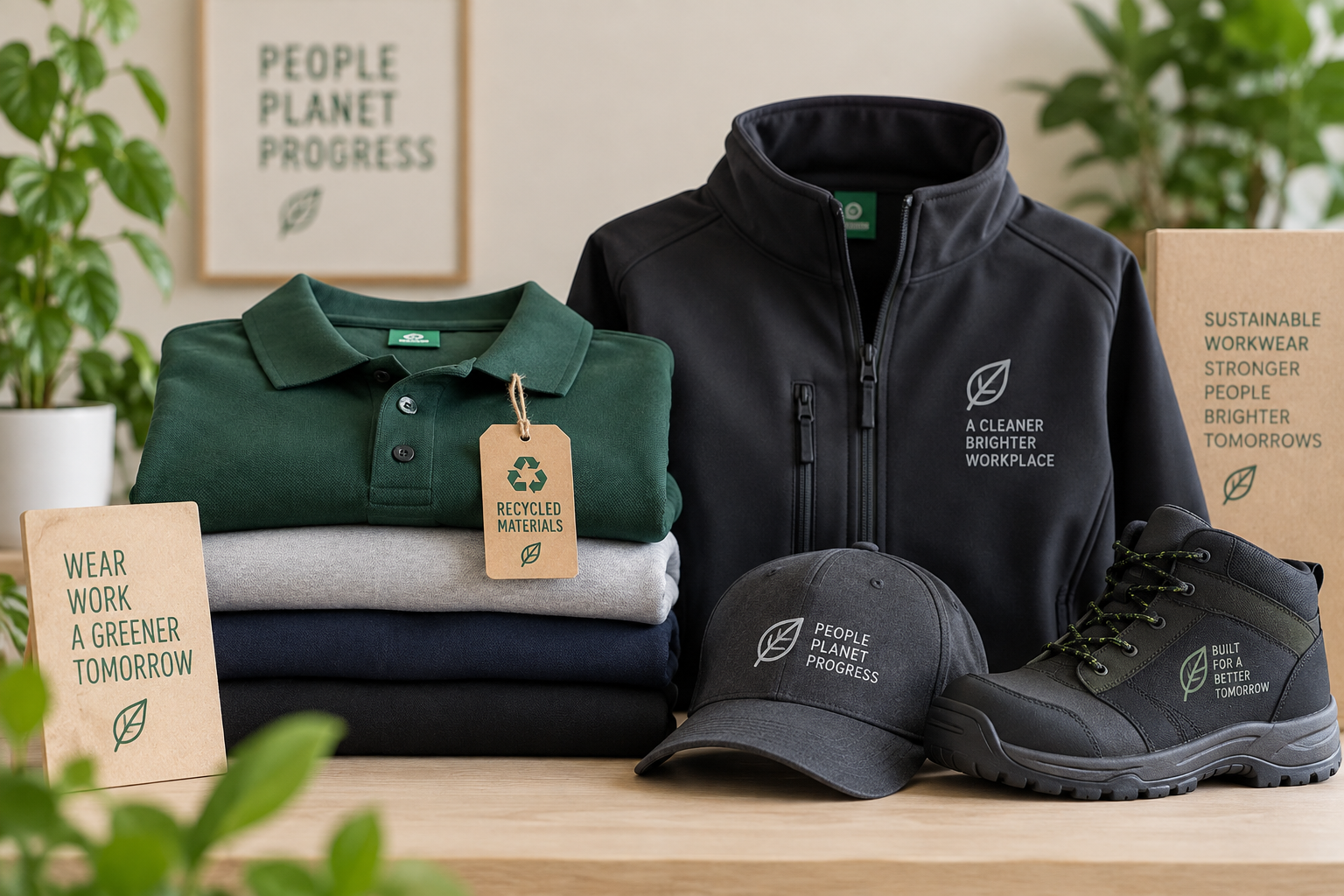
Workwear
Check garment labels and technical specifications for organic or responsibly sourced fibres and recycled polyester content. Prioritise fit, durability and replaceable or repairable components so clothing stays in use for longer.

Furniture
Look for recycled materials, responsibly sourced timber and robust construction. Modular furniture that can be reconfigured, repaired or fitted with replacement parts can adapt as your workplace changes.
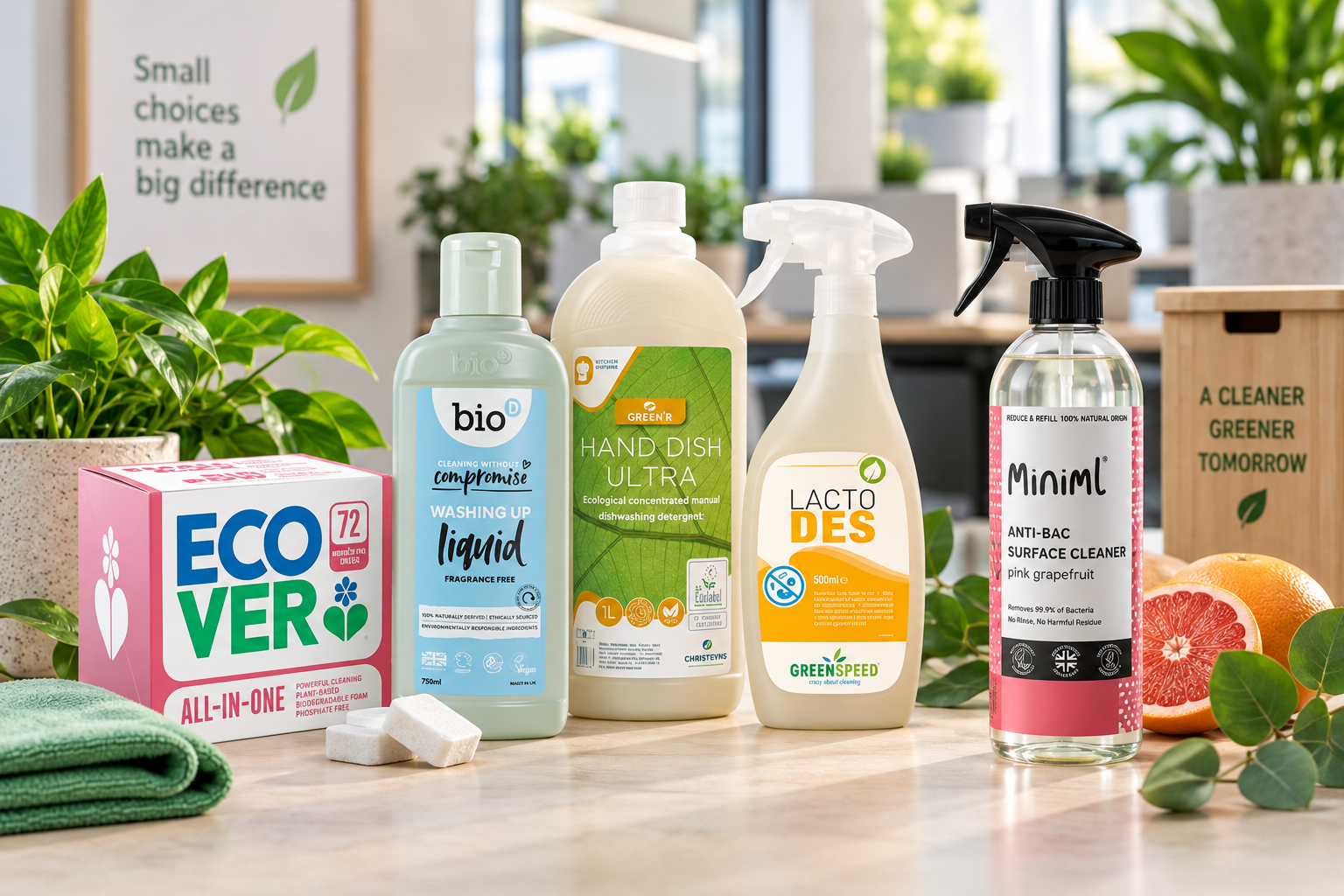
Cleaning Supplies
Compare concentrated, refillable and clearly dosed products that reduce unnecessary packaging. Where suitable, look for biodegradable formulations and independently verified environmental labels rather than broad claims such as 'natural' or 'green'.

Catering Supplies
Choose reusable cups, plates and cutlery first. Where single-use products are genuinely needed, check the material, disposal instructions and whether the correct composting or recycling route is available to your workplace.
The most sustainable purchase may be the one you do not need to repeat.
Before choosing between two products, ask whether you can buy less, refill it, repair it or keep it in use for longer. Durability and cost per use can be just as important as the material on the label.
Four Steps to Buying More Sustainably
A simple purchasing process makes it easier to compare products consistently, avoid greenwashing and show how your buying decisions support your workplace sustainability goals.
Define your sustainability criteria
Decide what matters most to your organisation. You may be reducing single-use plastic, lowering waste, improving ethical sourcing, consolidating deliveries or extending product life. A clear priority makes products easier to compare.
Look for trusted evidence
Check for recognised third-party certifications, clear recycled-content percentages, material specifications and disposal instructions. Be cautious with broad claims that are not supported by evidence.
Buy less and reduce waste
Consolidate orders, select refillable or concentrated products and buy in bulk only when the stock will be used. This can reduce packaging and deliveries without creating waste through over-ordering.
Evaluate the supplier
Ask for relevant certifications, sustainability information and sourcing details. It is also worth checking whether the supplier offers repair, take-back, recycling or delivery-consolidation services.
Trusted Labels Worth Recognising
Certifications do different jobs. Some relate to a product or material, while others apply to an organisation or its management system. Always check exactly what has been certified.
FSC
Useful when buying paper, notebooks, packaging or furniture made from forest-based materials. Check the exact FSC claim shown on the product.
Fairtrade
Relevant to eligible products and ingredients such as coffee, tea, cocoa and cotton. The specific Fairtrade Mark explains what is covered.
B Corp
B Corp Certification assesses a company's social, environmental and governance practices. It is a company certification rather than a product label.
ISO 14001
Relates to an organisation's environmental management system. It can indicate a structured approach, but it is not an eco-rating for every product sold.
EU Ecolabel
An EU voluntary label for eligible product and service groups that meet criteria designed to reduce environmental impact across the lifecycle.
Useful distinction: a company certification or environmental management standard does not automatically mean every product is eco-friendly. Check the scope of the certification and the evidence for the individual product.
Your Eco-Friendly Buying Checklist
Use these five checks to compare products quickly. Not every item will tick every box, so focus on the criteria that make the biggest practical difference for your workplace.
- It contains clearly stated recycled, renewable or responsibly sourced materials.
- Any environmental claim is supported by a relevant, verifiable certification or specification.
- It is reusable, refillable, repairable or durable enough to reduce repeat purchasing.
- Its packaging is minimal, recyclable or plastic-free where a practical alternative exists.
- The supplier is transparent about sourcing, environmental practices and the scope of its credentials.
Also check the end-of-life route. A product described as recyclable or compostable only delivers that benefit when the correct collection and processing option is available.
Eco-Friendly Office Supplies FAQs
What is a good first eco-friendly swap for an office?
Start with a high-volume product you buy regularly, such as copier paper, notebooks, pens, bin liners or cleaning products. A well-chosen change in a frequently purchased category can be easier to track and maintain.
Does recyclable mean the same as recycled?
No. Recycled content describes material that has already been recovered and used again. Recyclable means the product may be accepted for recycling after use, depending on its material and your local collection facilities.
Are compostable catering products always the best option?
Reusable products are usually the more practical first choice for repeated use. Compostable products can be helpful for unavoidable single-use situations, but only when the correct composting collection and processing route is available.
Are eco-friendly workplace supplies more expensive?
Some have a higher purchase price, but refillable, concentrated, repairable or longer-lasting products may offer a lower cost per use. Compare lifespan and replacement frequency as well as the initial price.
Ready to Make a Greener Switch?
Browse eco-friendly workplace essentials or speak to the Purple Panda team about building a practical product list around your organisation's priorities.
