
Professional Cleaning Supplies Buyers Guide
How to choose the right cleaning products, tools, equipment, hygiene supplies and PPE for a cleaner, safer and more efficient workplace.
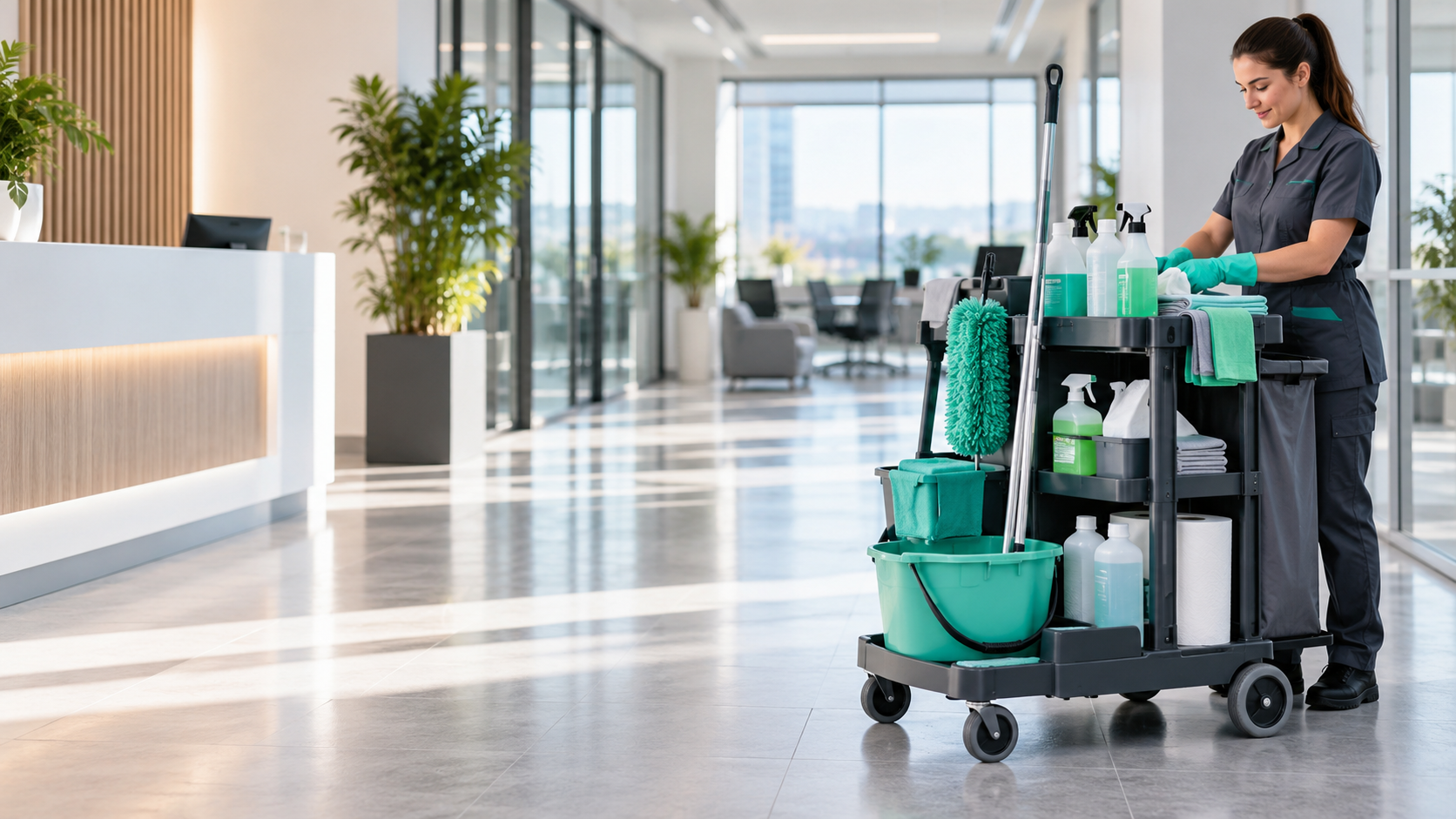
Choosing cleaning supplies for a professional workplace
The condition of your workplace can affect staff, customers, day-to-day efficiency and the overall impression your business creates.
Professional cleaning is different from cleaning at home. Commercial spaces usually experience greater footfall, more frequent use and more demanding cleaning requirements.
Choosing the right professional-grade supplies can improve cleaning efficiency, safety and cost control while helping you prepare for future growth and your organisation's sustainability goals.
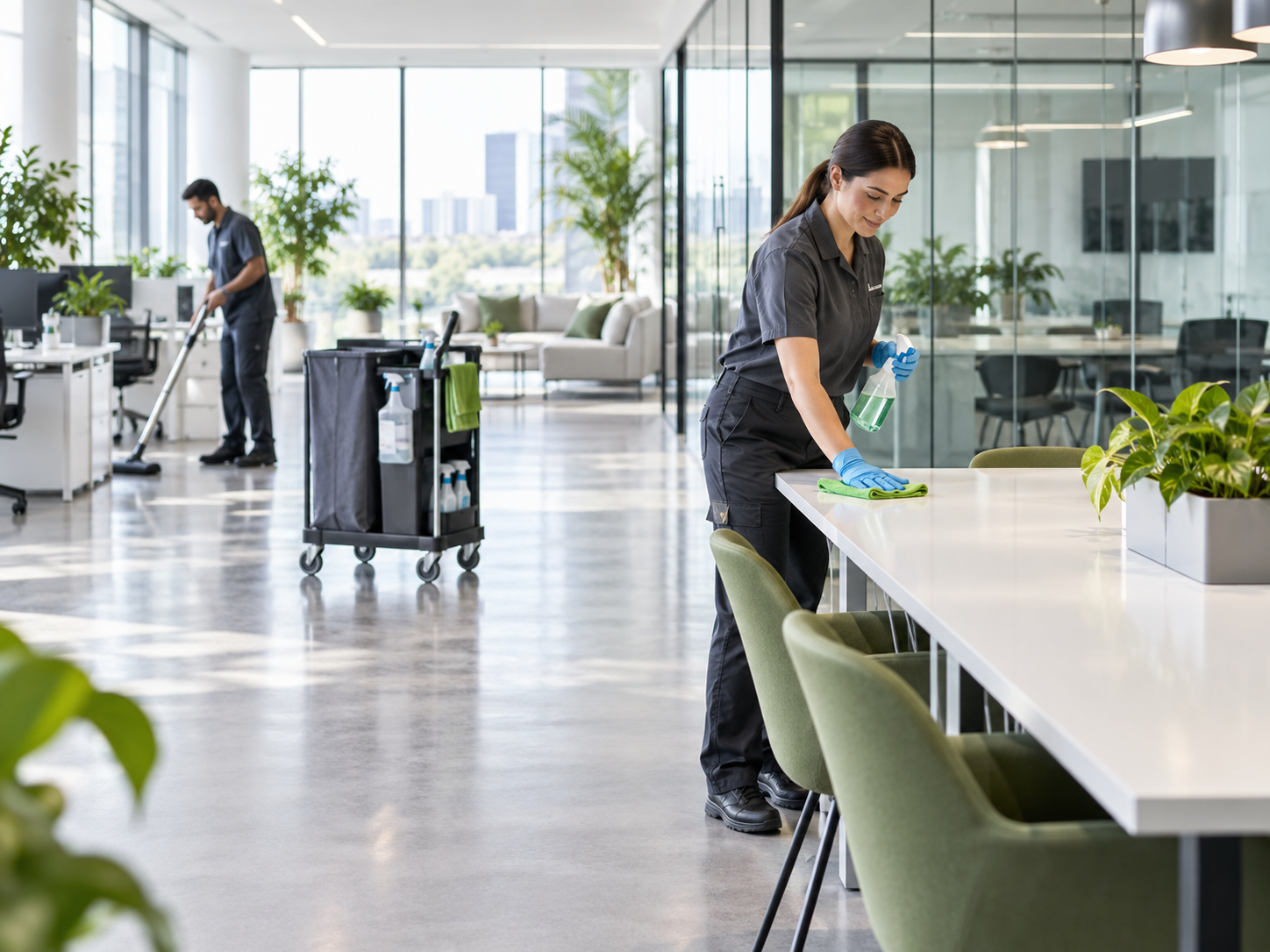
Understand your cleaning requirements
Where you work will determine what you need. The size of the premises, surface types, footfall and frequency of cleaning should all influence your product selection.
Measure the space
Consider how much floor and surface area will need regular cleaning.
Consider frequency
Daily, several times per day, weekly or periodic deep cleaning?
Identify surfaces
Floors, glass, stainless steel and specialist surfaces may need different products.
Plan procedures
Consider staff training, schedules, maintenance and stock control.
What type of workplace are you cleaning?
Offices
All-purpose cleaners, sanitising sprays, glass cleaners and effective vacuum cleaning.
Schools
Cleaning solutions appropriate for busy educational environments and frequently touched surfaces.
Fitness & Gyms
Antibacterial surface wipes, odour neutralisers and quick-drying sanitising products.
Food Service
Food-safe sanitisers and cleaning products suitable for food preparation environments.
Healthcare
Disinfection products, disposable cleaning supplies and protective equipment.
Hotels
Effective cleaning combined with presentation and fragrance.
Restaurants
Degreasers, food-safe cleaners and suitable floor cleaning products.
Warehouses
Heavy-duty cleaning, degreasers and durable commercial equipment.
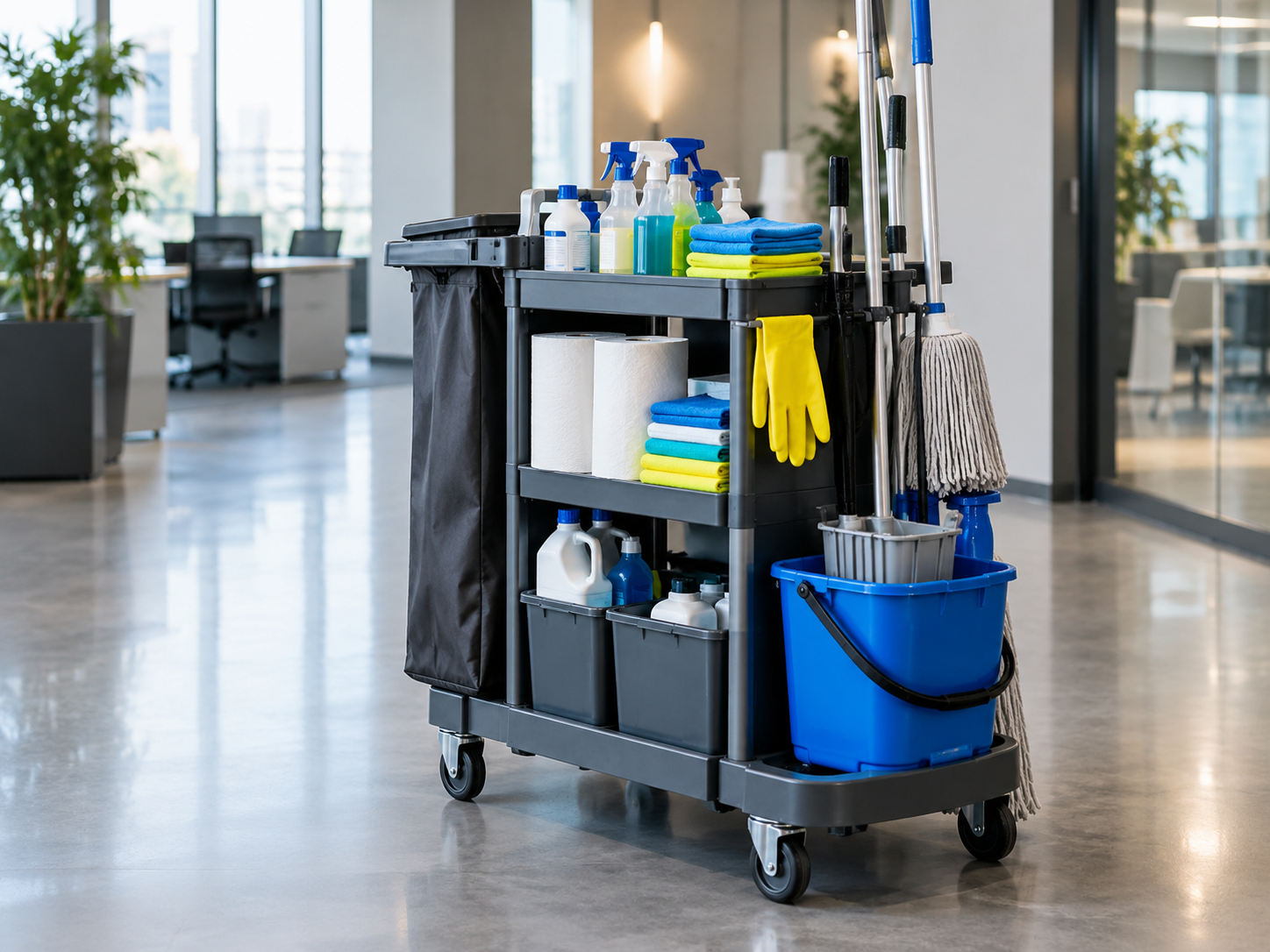
Ask these questions first
- How much floor and surface area needs cleaning?
- How frequently does each area need cleaning?
- Are there high-traffic areas?
- How many different surface types are present?
- Do any surfaces require specialist products?
- Will staff need product or equipment training?
- How will cleaning products be stored?
- How will stock levels be monitored?
Why use professional cleaning products?
Commercial environments are usually used far more intensively than equivalent spaces at home.
Professional cleaning products are designed for more demanding environments and can make it easier to maintain a consistent cleaning standard.
Concentrated products can also be more economical, as smaller quantities may be required for each task.
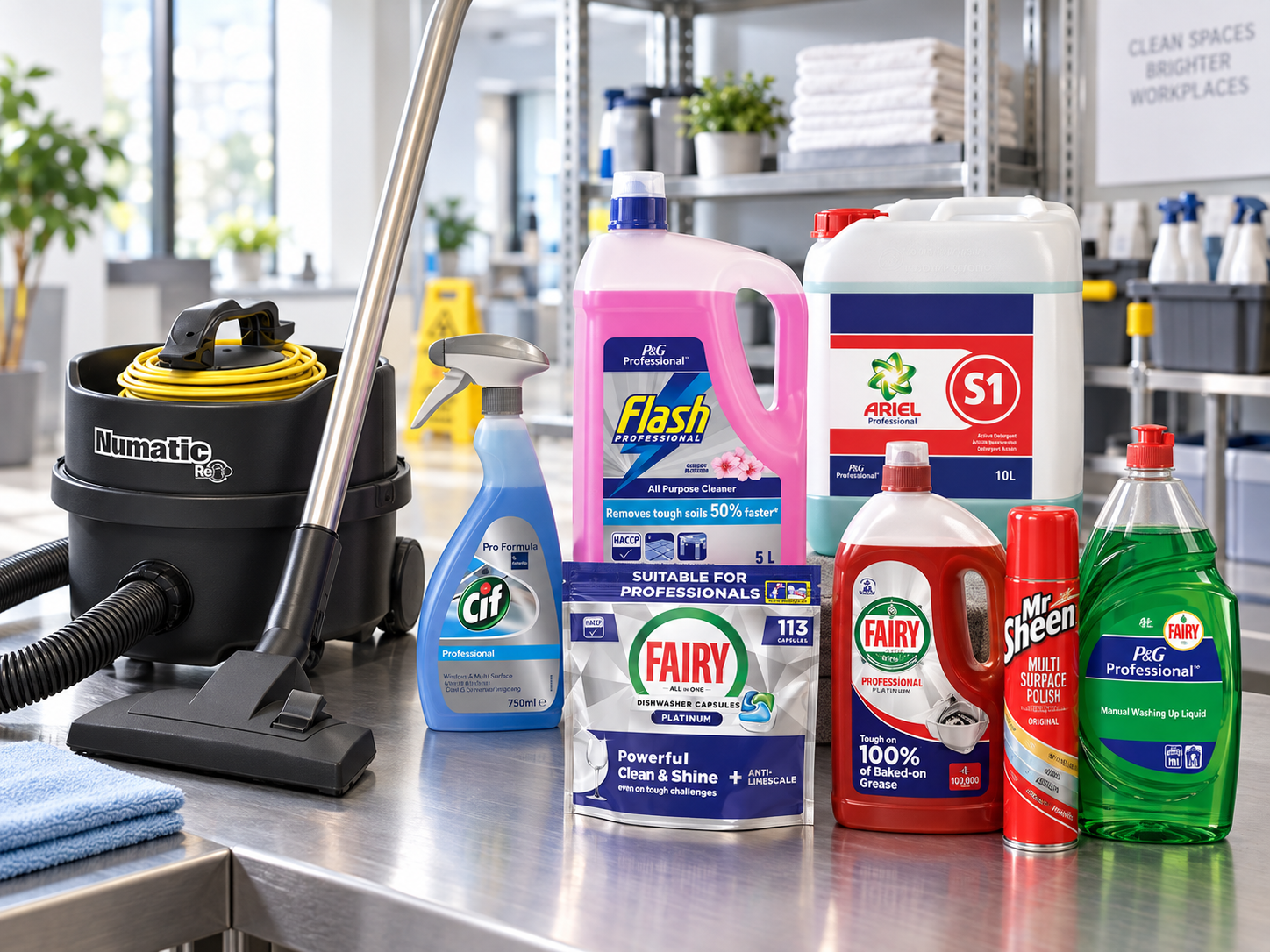
Cleaning, sanitising, disinfecting or sterilising?
These terms sound similar but describe different processes.
Cleaning
Removes dirt, dust and visible soils from a surface. Cleaning is normally the first step.
Sanitising
Reduces bacteria and microorganisms and is commonly associated with food and dining areas.
Disinfecting
Uses disinfectant to target specified microorganisms. Always check the individual product instructions.
Sterilising
A more intensive process associated mainly with specialist healthcare environments.
Look after your cleaning equipment too
The equipment used to clean your workplace needs its own maintenance routine.
Chemicals should be clearly labelled and safely stored, while equipment should be regularly inspected.
- Monitor cleaning stock levels
- Replace vacuum filters when required
- Inspect worn or damaged equipment
- Keep cleaning tools themselves clean
- Store chemicals appropriately
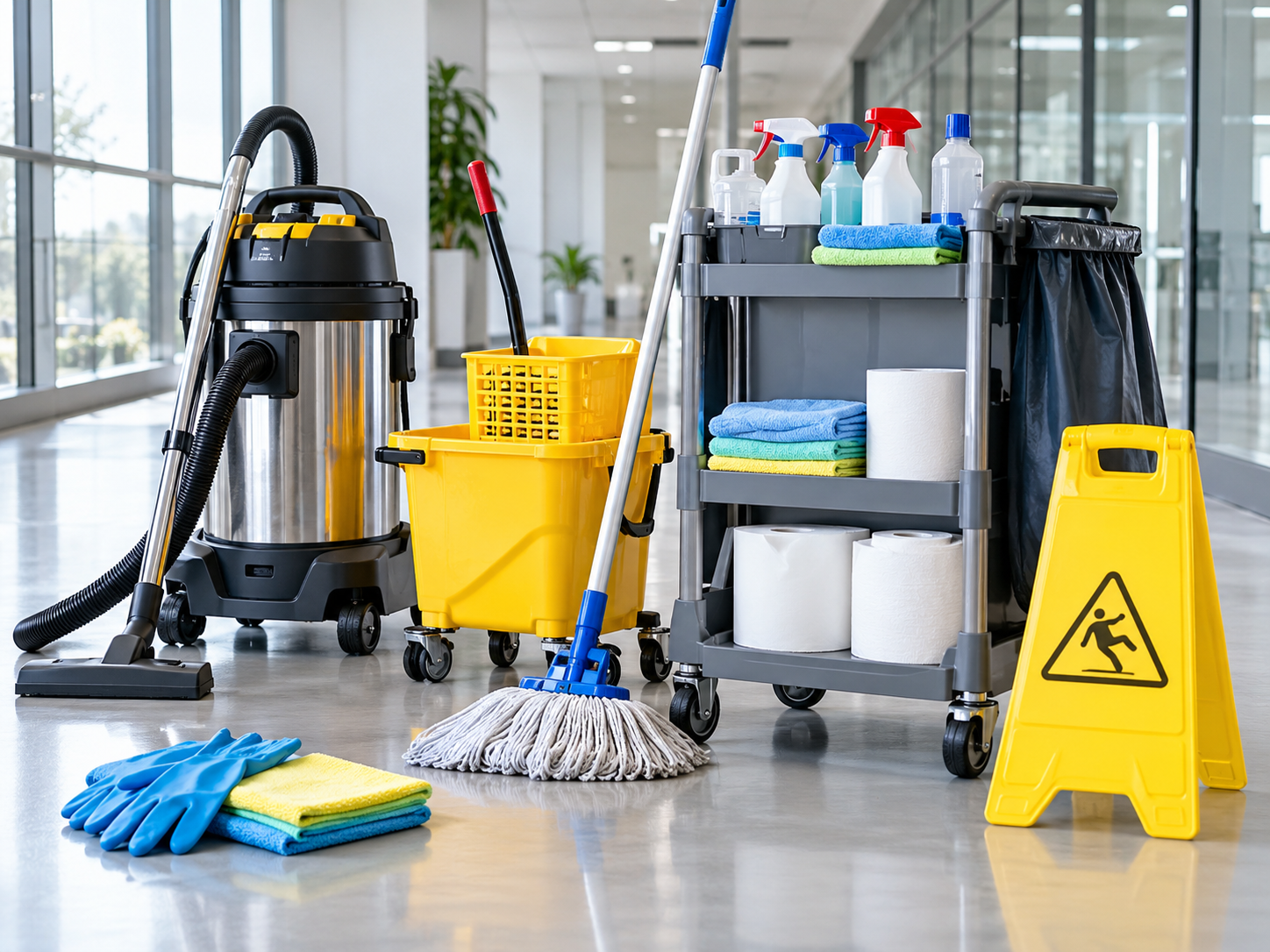
Personal hygiene & PPE
Make it easy for staff to maintain good hygiene and provide suitable protective equipment for cleaning tasks.
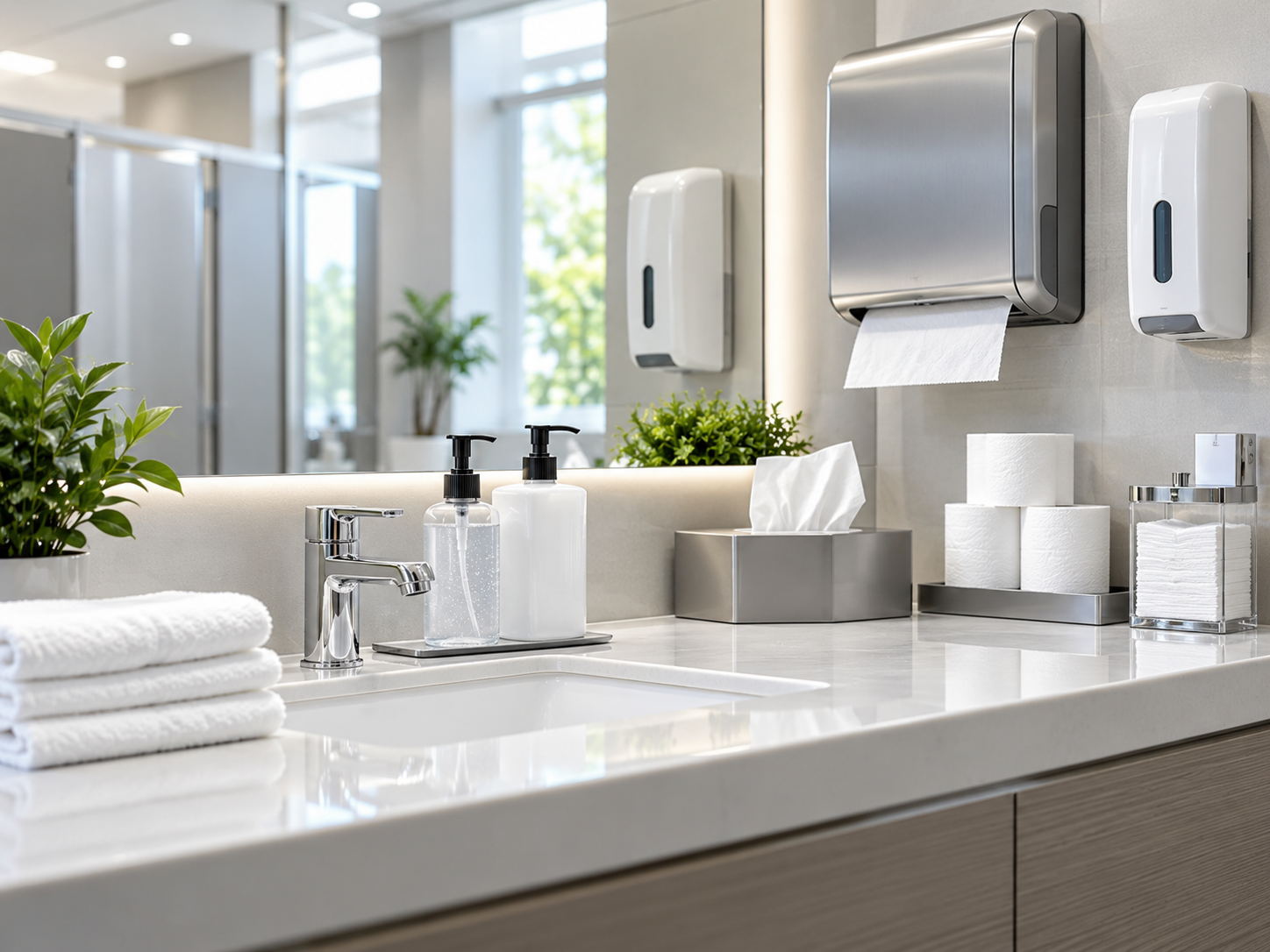
Personal hygiene
Make good hygiene convenient with readily available washroom and hand hygiene products.
- Hand soaps
- Soap dispensers
- Paper towels
- Hand sanitisers
- Washroom supplies
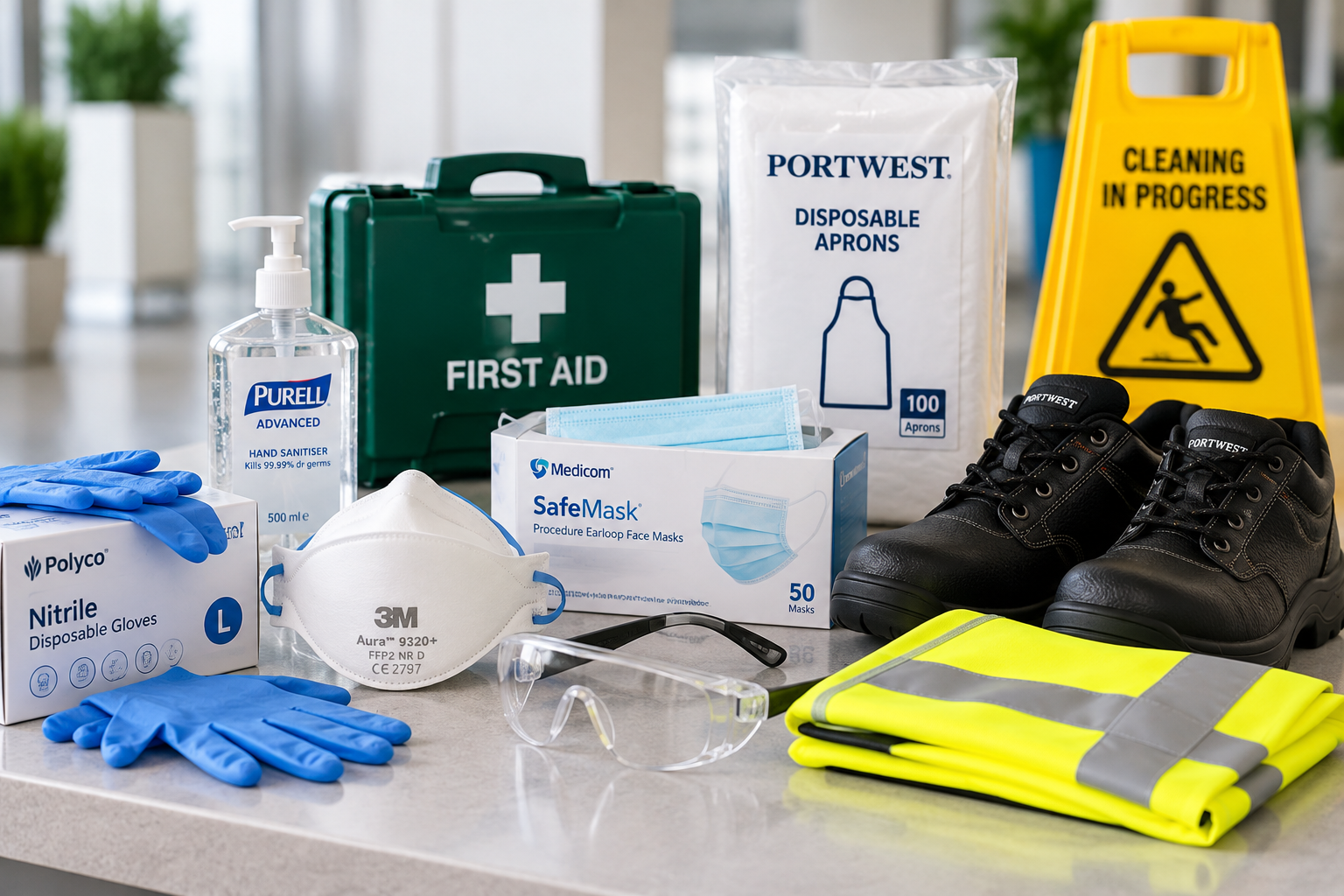
PPE & safety
Keep suitable PPE available and replace damaged or worn equipment regularly.
- Protective gloves
- Protective eyewear
- Aprons
- Spillage kits
- Face masks where appropriate
- Suitable refuse sacks
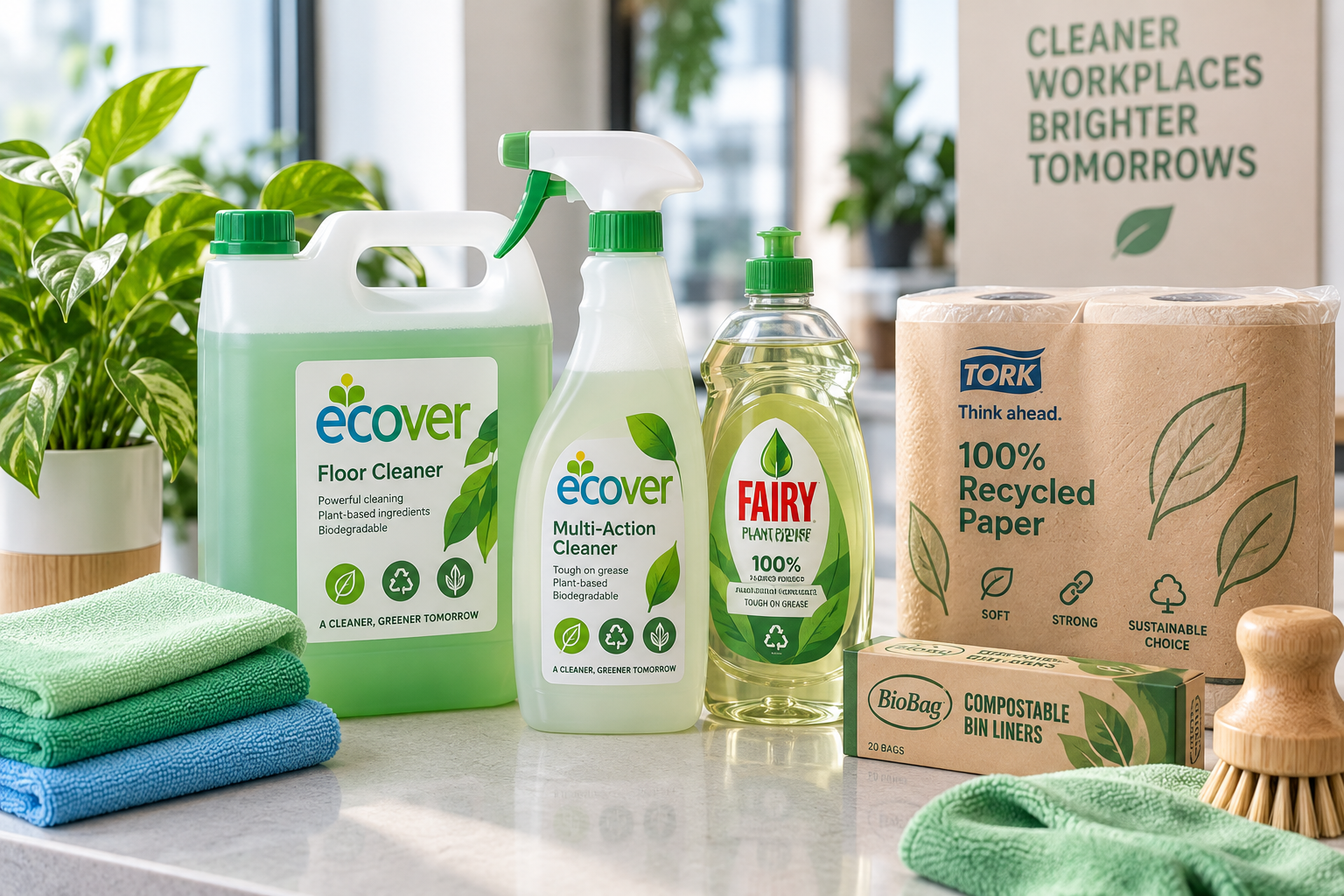
Make your cleaning routine more sustainable
Cleaning performance and sustainability don't need to compete. Small product and process changes can help reduce waste.
Consider colour-coded cleaning
Different coloured cloths, buckets, mops and cleaning tools can help keep equipment separated by area.
Your organisation can create its own colour system based on the premises and cleaning procedures.
Blue
Example: washrooms
Red
Example: kitchen
Green
Example: bar area
Yellow
Example: front of house
